AI security, guardrails, and what it takes to run frontier models where the rules are strict.
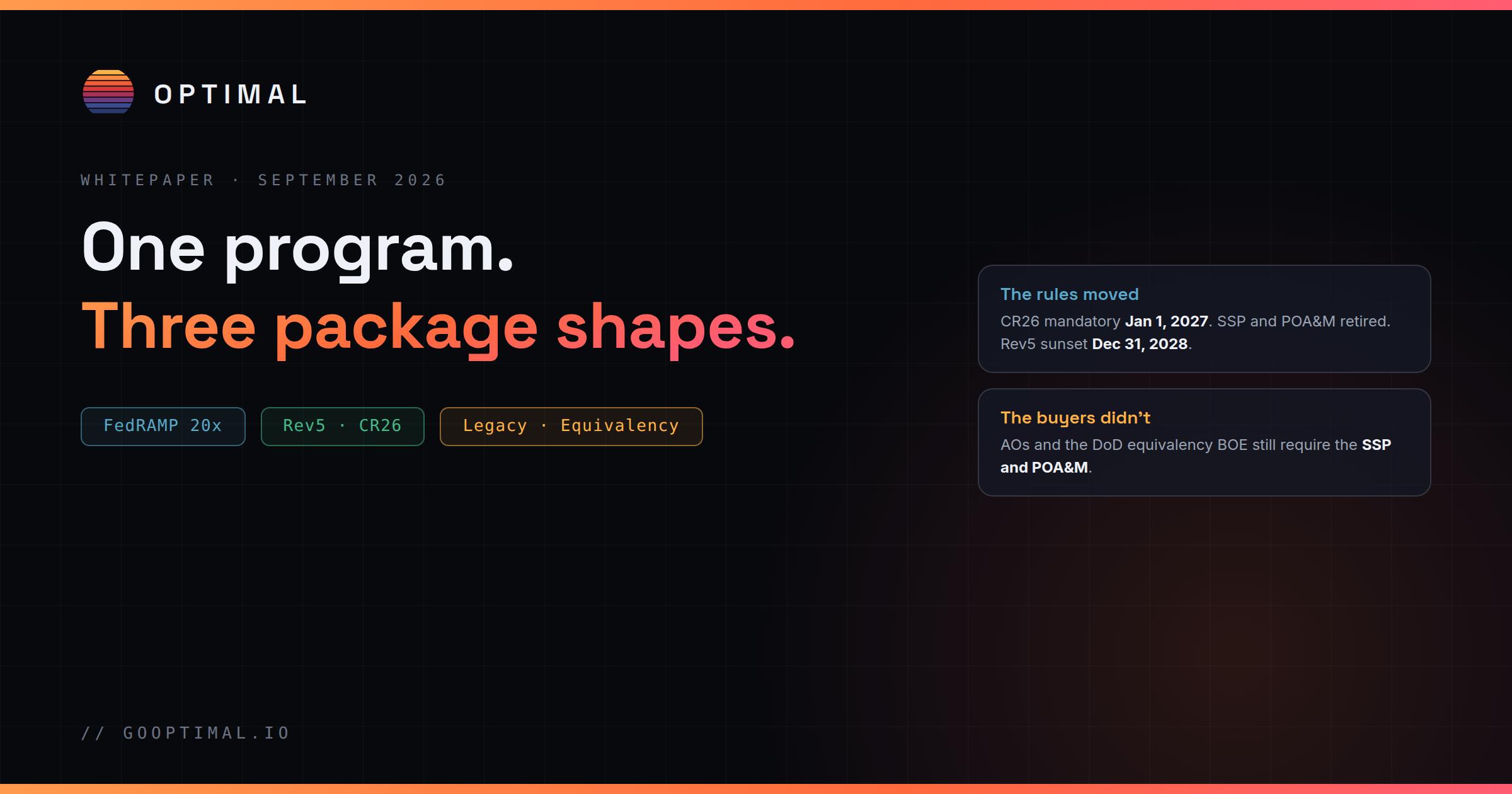
FedRAMP retired the SSP and POA&M. Agencies and the DoD equivalency process still require them. A blueprint for building one evidence layer that emits every package shape a buyer asks for.
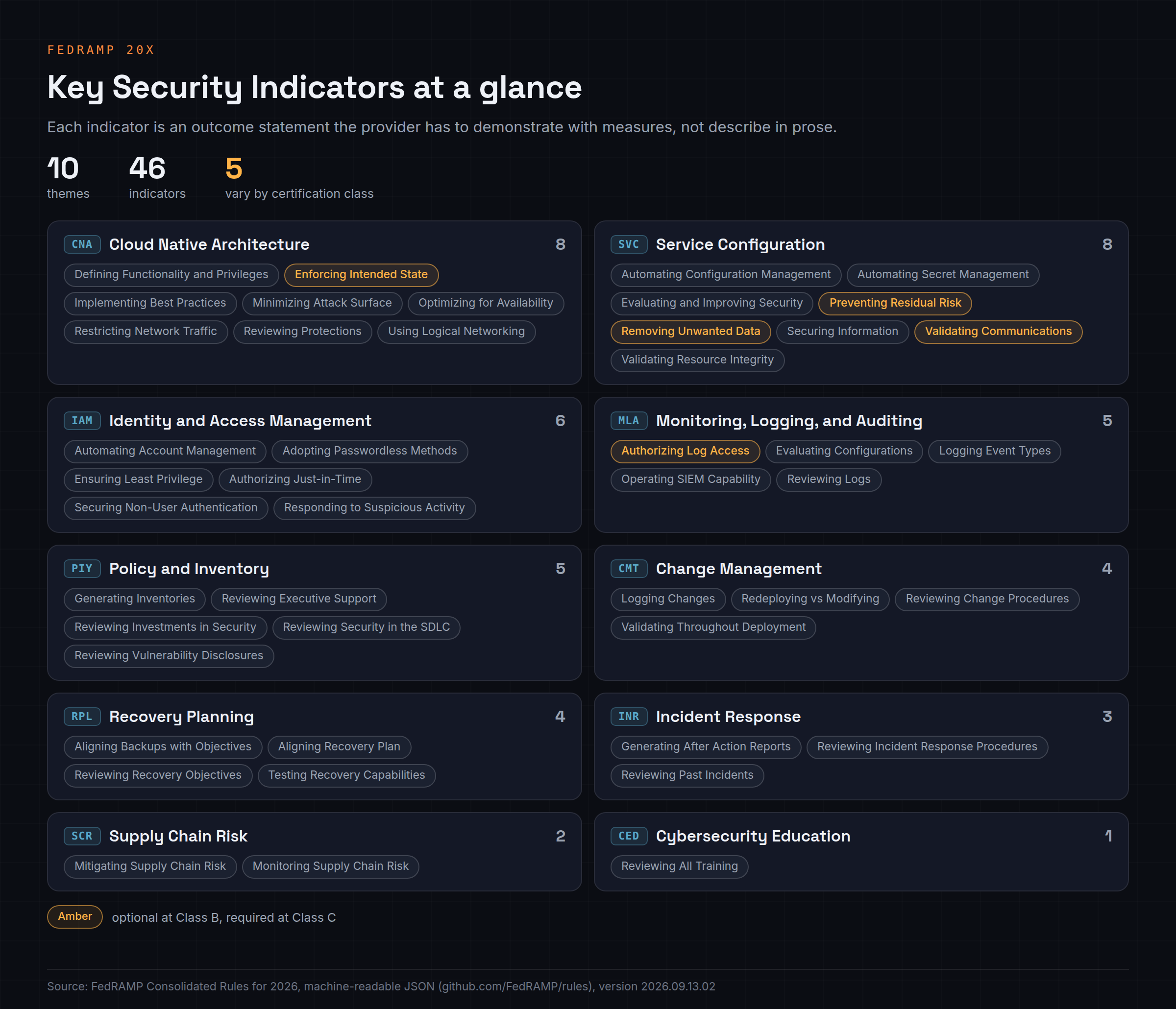
Under the Consolidated Rules for 2026, a KSI is an outcome you have to prove, keep proving and have independently confirmed. Here's what the rules actually require.
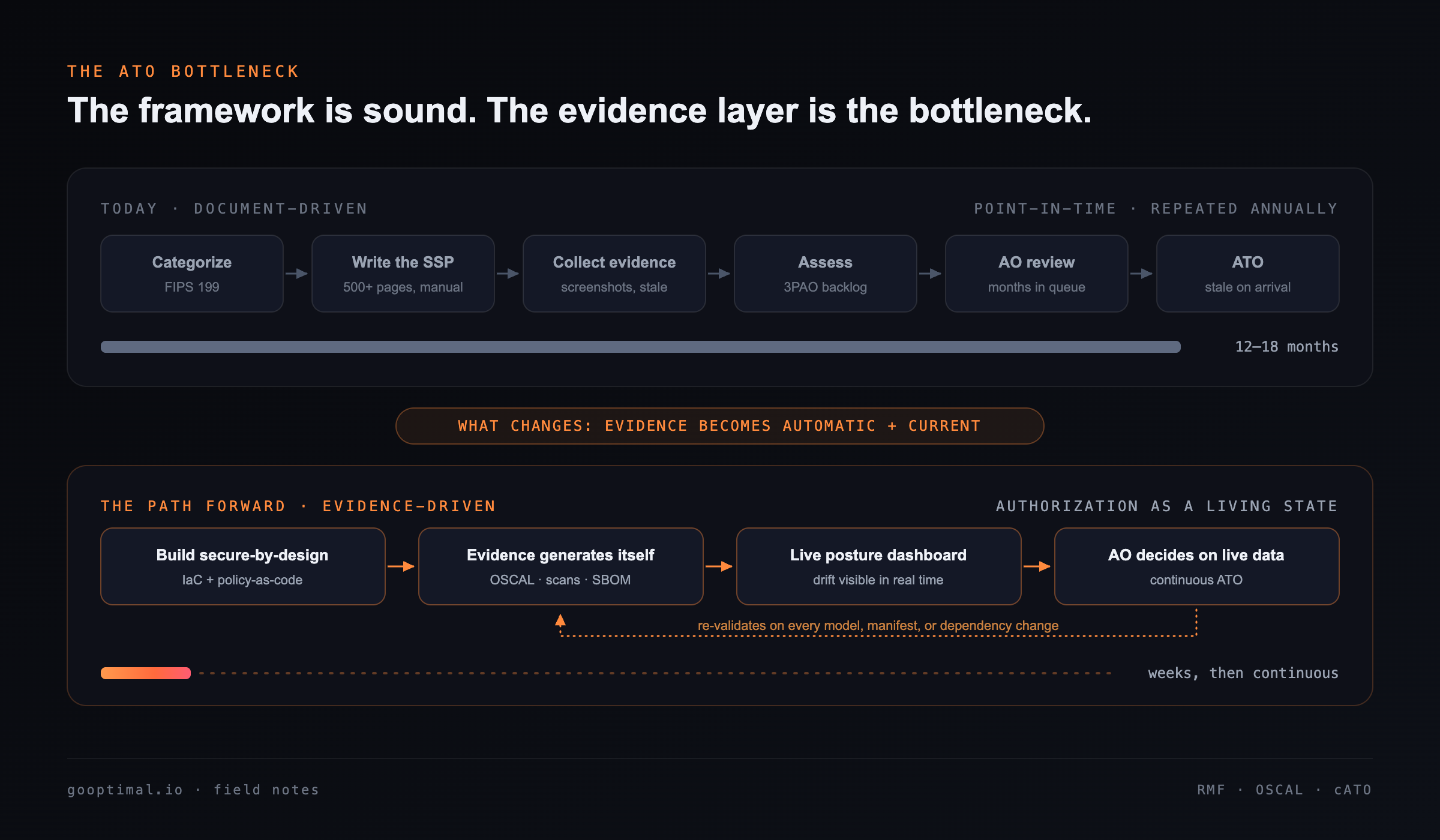
The ATO process was designed to manage risk. Instead it has become the risk, delaying mission-critical deployments by 12 to 18 months while actual security posture degrades. Where the time really goes, why the Pentagon's SWFT and CSRMC push is necessary but not sufficient, and what actually fixes it.
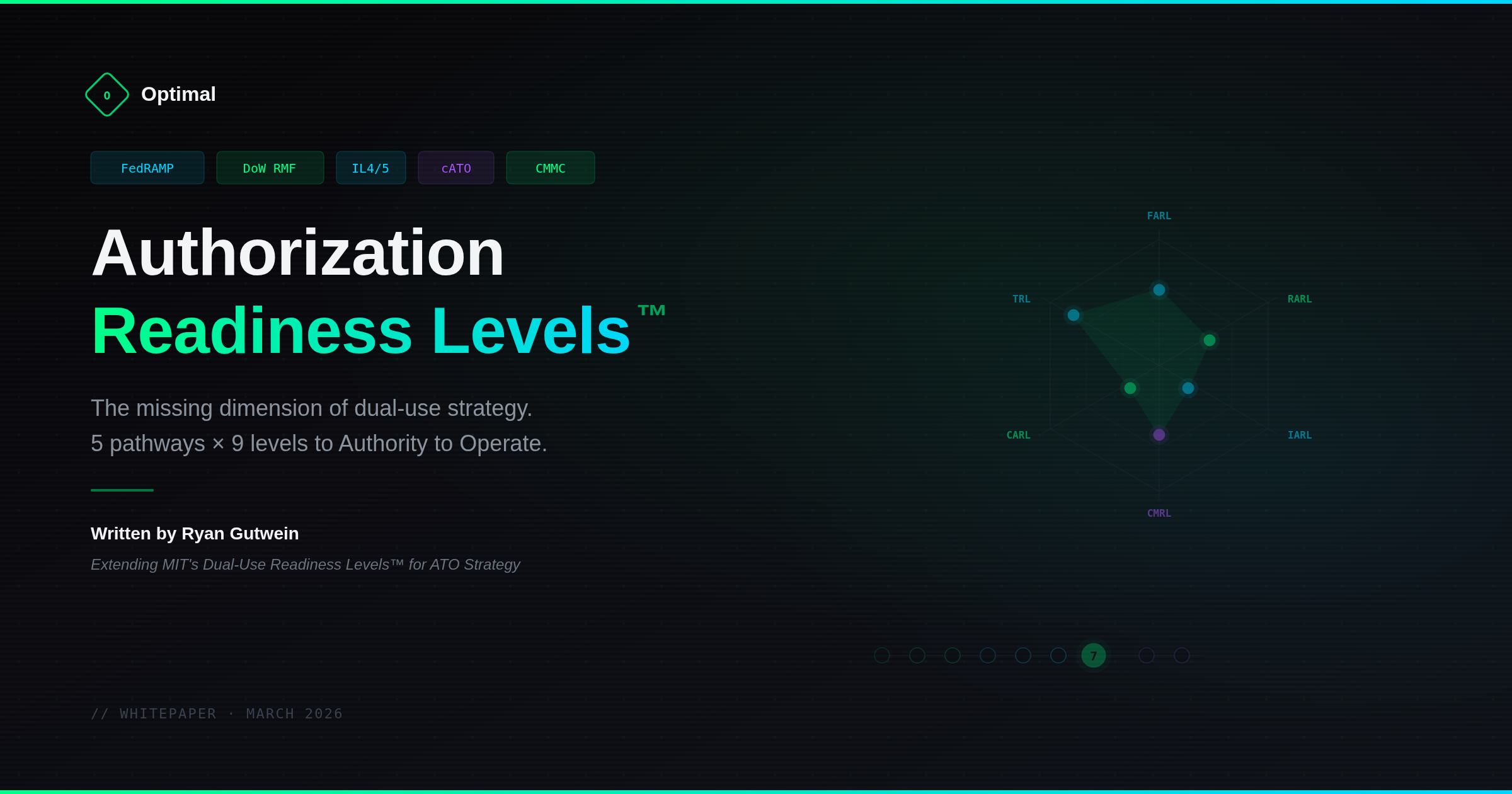
A framework mapping 5 ATO pathways × 9 readiness levels for dual-use companies navigating FedRAMP, DoD RMF, Impact Level, cATO, and CMMC authorization.
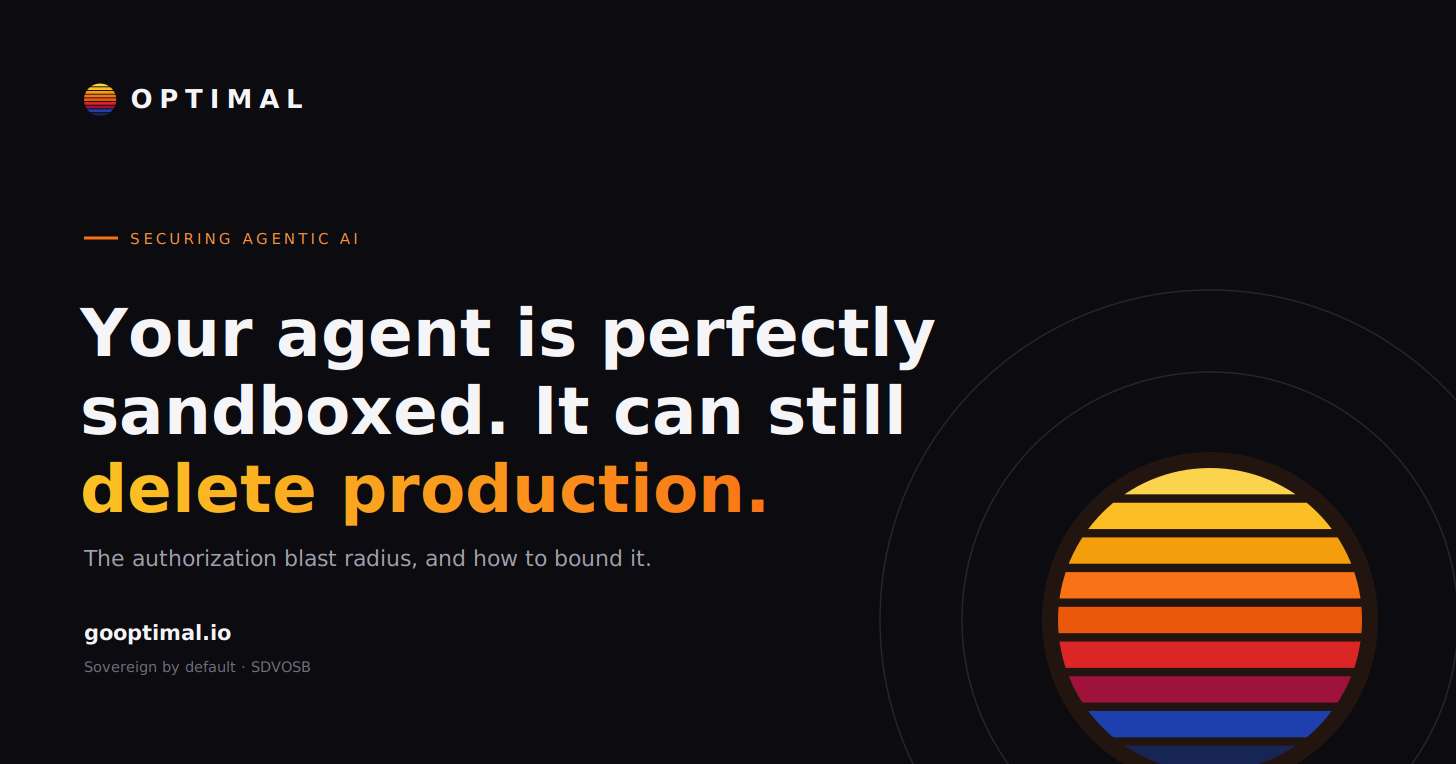
Sandboxing does not bound what an agent is allowed to do. An overview of our whitepaper on securing agentic AI: enforcement at the tool boundary, bounded blast radius, and continuous authorization.
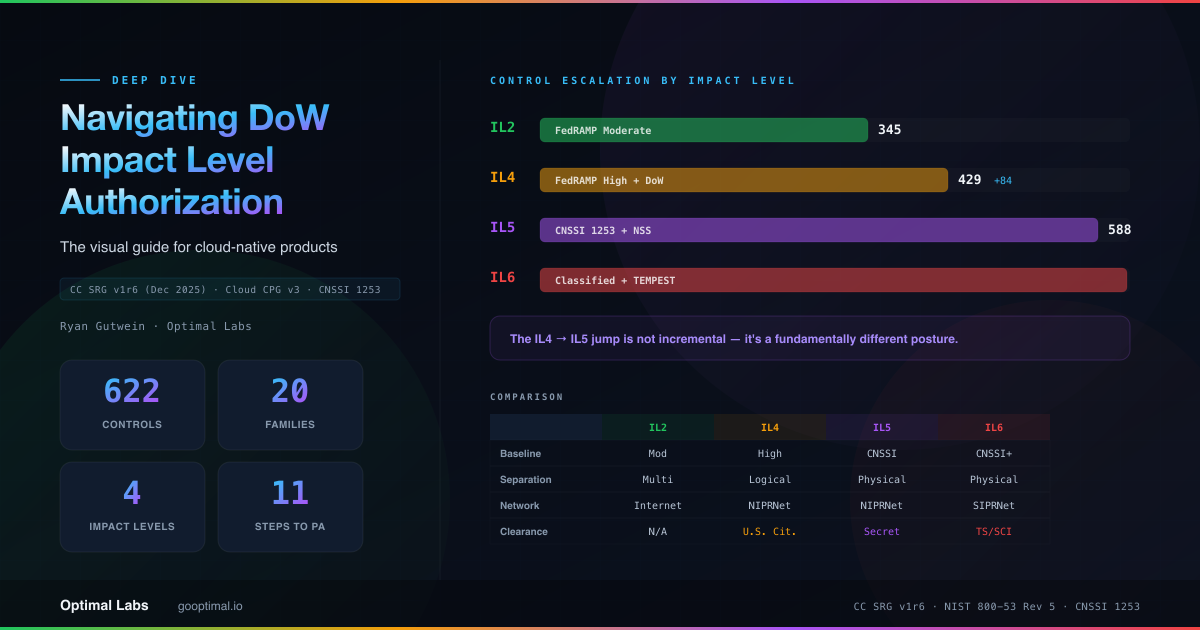
622+ controls, 20 families, 5 impact levels, 11 steps to Provisional Authorization. The visual guide for cloud-native companies navigating DoW IL authorization.
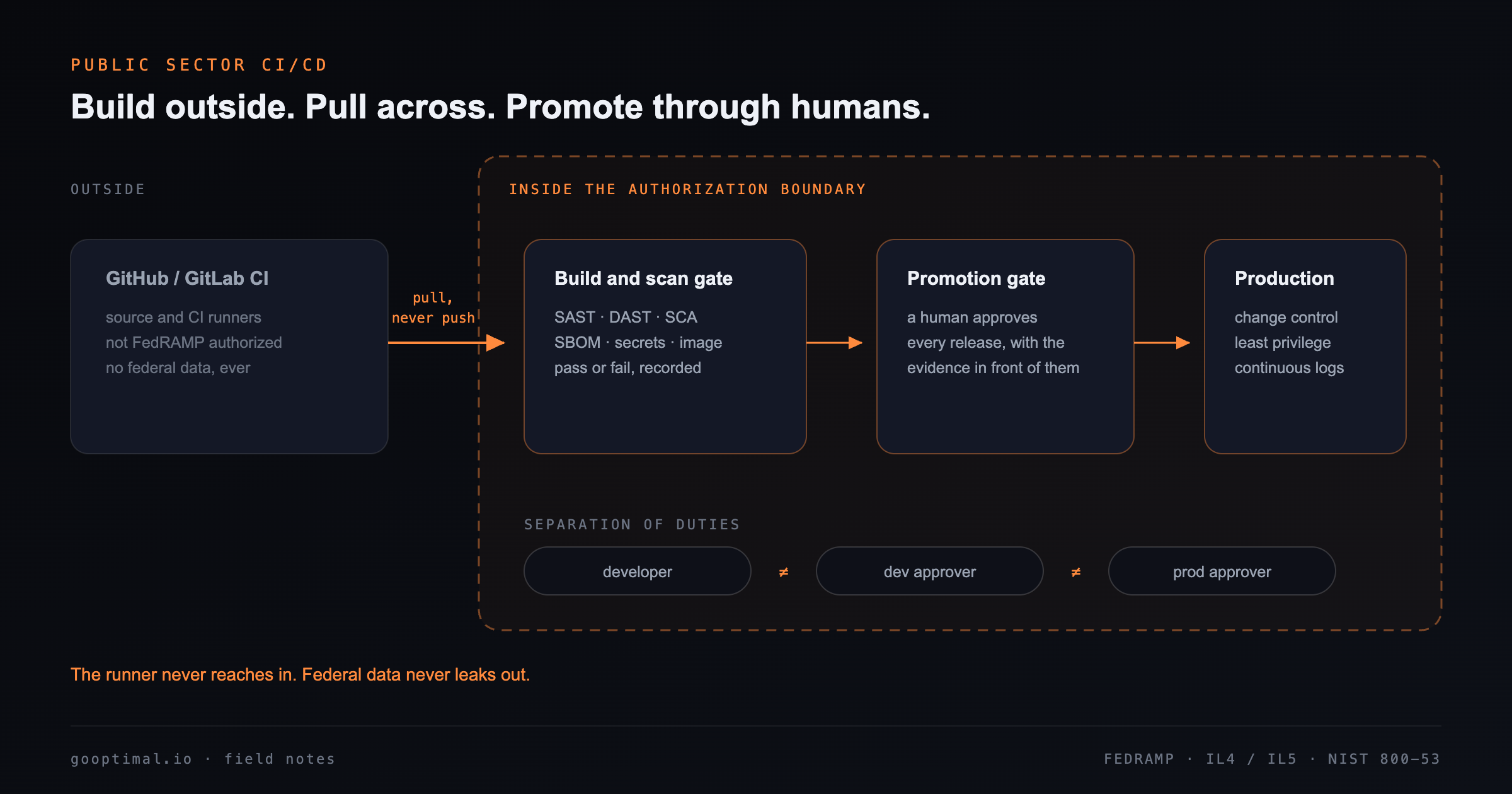
A practical guide to architecting a CI/CD pipeline that crosses the authorization boundary. Using GitHub or GitLab CI outside, pulling code into a secure dev environment, and promoting to production through a manual gate. For FedRAMP, DoW Impact Level, and agency ATO environments.
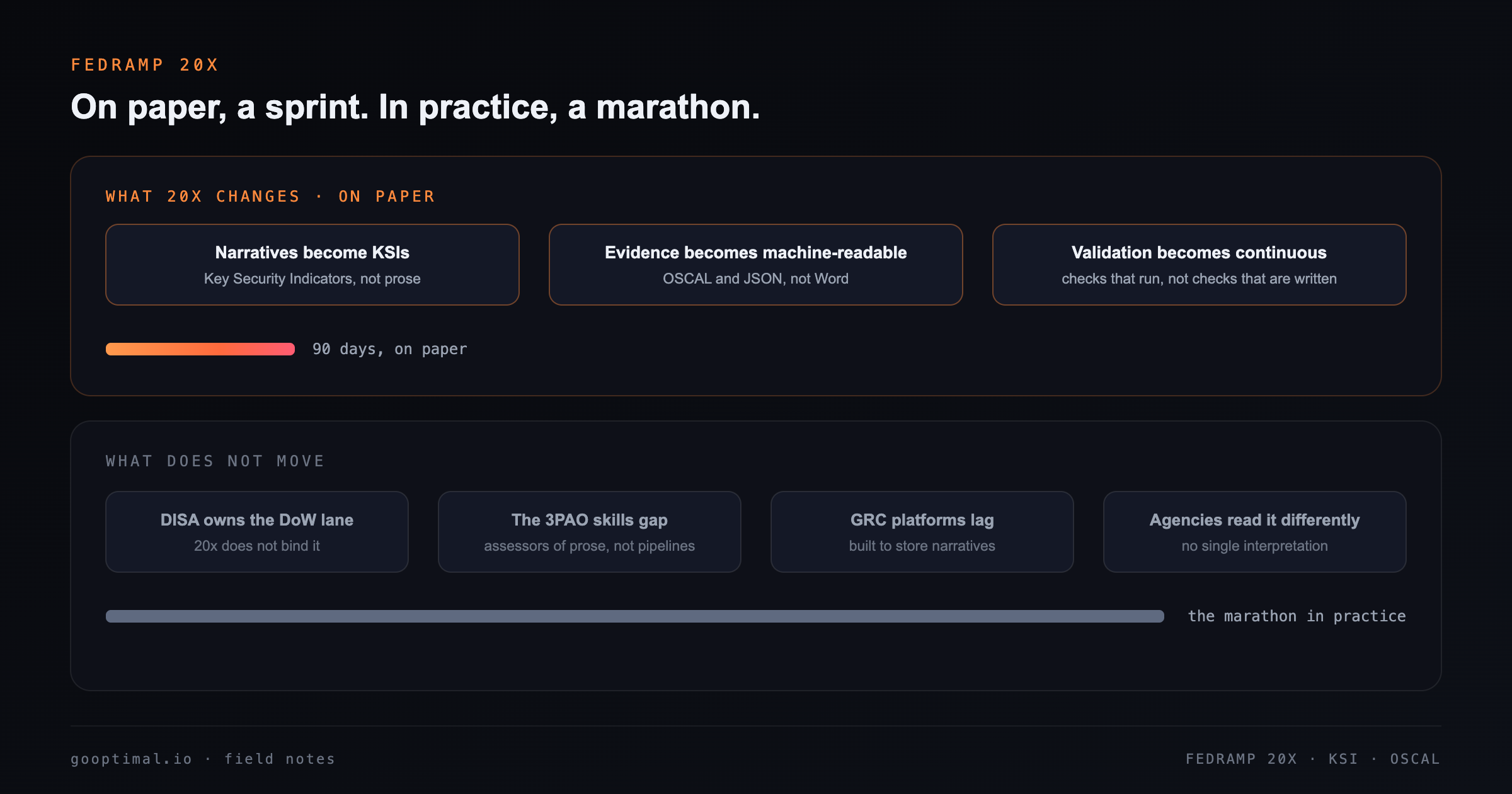
FedRAMP 20x promises to streamline cloud authorizations with automation over documentation. But across DoW, civilian agencies, and the IC, the real challenge is not the framework. It is the institutional inertia that governs how authorizations actually work.

The ATO process doesn't have to take 18 months. Learn five practical strategies to compress your Authority to Operate timeline while maintaining compliance rigor across FedRAMP and CMMC frameworks.

Executive orders mandate SBOMs, but generating them is only half the battle. Learn how to operationalize your software bill of materials for real security outcomes with practical CI/CD integration, vulnerability correlation, and license compliance strategies.

As DoD adoption of AI accelerates, so do adversarial threats. Learn about the top attack vectors targeting military AI systems and how to defend against them using MITRE ATLAS and NIST AI RMF.